

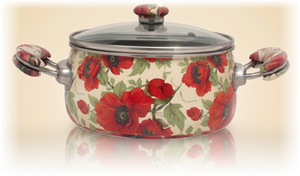

Caring for Enamel and Non-stick Cookware: From First Use Onwards
Whether a pan lasts ten years or one is mostly decided in its first week. Here are the care questions we are asked most.
Before the first use
- Remove labels and packing tape; soften any residue with warm water.
- Wash in warm water with a drop of washing-up liquid and dry.
- Wipe non-stick surfaces with a few drops of cooking oil on kitchen paper before the first use.
- Make the first heating gentle, with water or oil in the pan.
Everyday use
- Match the burner to the base; flames should not lick up the sides.
- Never heat an empty pan on a high flame — the single biggest risk to a non-stick surface.
- Use wood, silicone or heat-resistant plastic; metal cutlery scratches.
- Do not plunge a hot pan into cold water; the shock can craze enamel.
- Add salt after the water boils; salt settling on the base can leave marks.
Cleaning
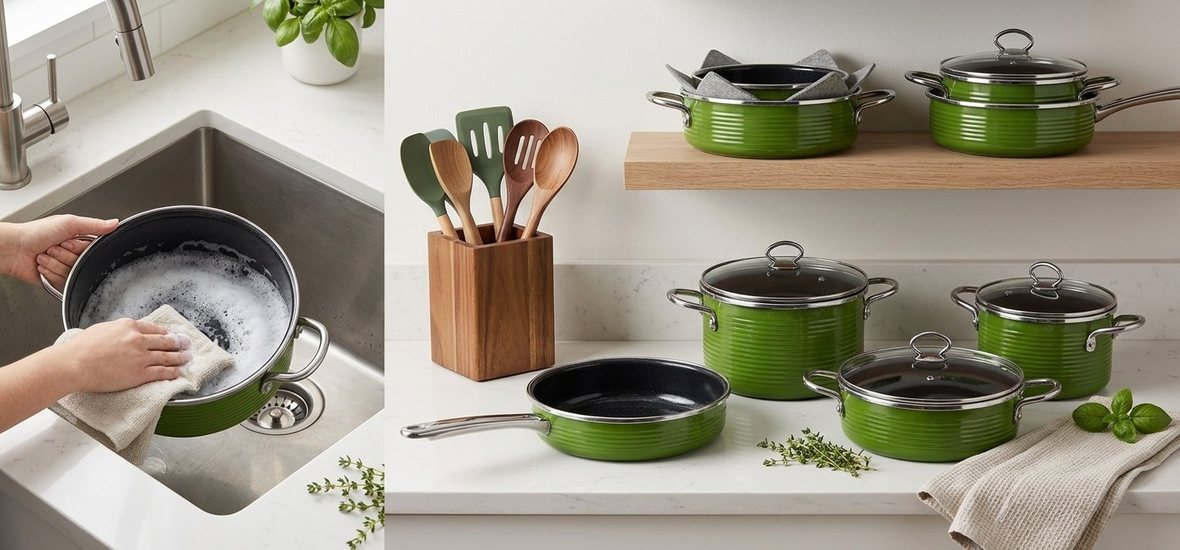
Warm water, a soft sponge and ordinary washing-up liquid are enough. For anything caught on, soak for 15–20 minutes and wipe with the soft side of the sponge.
No steel wool, scouring powder or oven cleaner: they take the gloss off enamel and the function out of non-stick.
For stubborn marks: two fingers of water and a teaspoon of bicarbonate of soda, boiled for a few minutes, then wiped out once cool.
For details by product type see the pots, storage, ovenware and kettles guides.
Storing
If pans must be stacked, put a cloth or sheet of kitchen paper between them, and rest lids on their side rather than upside down. Never put anything away damp.
Do not leave food standing in the pan; move leftovers into enamel storage containers.
When to replace
Stop cooking in a pan whose enamel is cracked or chipped, or whose non-stick surface has begun to peel. Loose handles can usually be replaced — write to us through the channels on the customer satisfaction page.
Frequently asked questions
Is enamel dishwasher safe?
It can go in, but hand washing lasts longer. If you use the machine, choose a short, cool programme.
My non-stick pan has started to stick — what now?
Usually it is a layer of burnt-on oil: soak and clean with a soft sponge. If the coating is peeling, replace the pan.
Can brown marks on enamel be removed?
Yes. Boiling water with bicarbonate of soda for a few minutes lifts most of them. Do not use abrasive powder.
My pan hums on induction — is that normal?
A light hum is normal. Matching the base to the ring reduces it.